
The Triple Talaq Bill is to be tabled in Rajya Sabha. It may either be passed or more likely it may go to a Select Committee. If it gets passed in its present format, the Bill is sure to be challenged in Court. Whatever the circumstances, following points need to be kept in consideration: Seeking... Continue Reading →
Triple Talaq Bill does not ban but validates it

Lok Sabha has passed the Triple Talaq Bill. I have always been an opponent of Triple Talaq and consider it totally un-Islamic. But the truth is that the Triple Talaq Bill does not ban but validates it making it valid but punishable under law with 3 years imprisonment. The argument being presented is that it... Continue Reading →
Need for a holistic empowerment of Muslims to remove their backwardness: Dr Javed Jamil

Report by Dr. G Bagsaraj Source Renowned Scholar and Head of Chair in Islamic Studies at Yenepoya University, Mangaluru, Dr Javed Jamil has called for “holistic empowerment” of Muslims to remove their backwardness. He was speaking as Chief Guest in the Pearl Jubilees Celebrations of Al-Ameen Progressive Educational Society at Belgaum (Belgawi). He said that... Continue Reading →
Dr. Javed Jamil lambastes Pharmaceutical Industry for unimaginably high prices of medicines

Report by Adnan Ahmad Renowned thinker and Head of Chair in Islamic Studies & Research, Yenepoya University Manguluru, has lambasted the Pharmaceutical Industry for charging “unimaginably” high prices for medicines. He was speaking at the inaugural function of the Pharmacy Week organised by College of Pharmacy at Yenepoya University, Manguluru. He said that the price of... Continue Reading →
Dharamyudh in Full swing

It is ironical indeed that the forces that are least hesitant to use violence as a means to establish or sustain their hegemony have been most vocal in criticising Jihad and Jihadism in Islam and Muslims. None can beat West in using force at the cost of the human life aimed at silencing all the... Continue Reading →
Hindu Pampering versus Muslim Appeasement

Yogi spent Rs 195.89 crore for the grand Diwali celebrations in Ayodhya. Of this, Rs 133.70 crore has been sanctioned by the Union government. When some leader even holds an Iftar party in Ramadhan, Hindutva Brigade feels hurt and wastes no time in declaring it “Muslim appeasement” worthy of utmost condemnation. But the all-out pampering... Continue Reading →
Sexual Assaults and Murders: Judicial and Social systems more to be blamed than schools

The daily news in recent months has become nauseating. For months, it is nothing more than violence, hatred and rapes that dominate the news. First, it was cow vigilantism. The “gau rakshaks” were busy paying tributes to their “mother” by taking the law into their own hands lynching the members of the minority community on... Continue Reading →
Rohingya Crisis: Let Humanity Prevail!

The Government is so much obsessed with Muslim factor that it has put the reputation of the country at stake in the United Nations, which has questioned its stand on what the whole world is seeing the biggest humanitarian crisis of recent times. Instead of taking the lead and showing to the world how much... Continue Reading →
“Right to Privacy” needs the Sentinel of “Fundamental Prohibitions”

In a “celebrated” judgment, recently, a nine-judge bench of the Supreme Court has ruled that Indians enjoy a fundamental right to privacy, that it is intrinsic to life and liberty and thus comes under Article 21 of the Indian constitution. In its 547-page judgment that declares privacy to be a fundamental right, the Supreme Court... Continue Reading →
BHU Paper: Allama Iqbal, “New World Order” and the Urgent Need of Unity of Religions

I was to present the following paper in the International Seminar on ‘Modern Thinkers of India’ organised by Banaras Hindu University. But considering the mood of the delegates dominated by RSS protagonists I switched on to an extempore presentation and dealt more on the difference between an approach based on religious identity, which RSS is... Continue Reading →
Introducing, popularizing and developing Applied Islamics — Part II

The globe of New World Order is therefore rapidly developing into nothing but a fireball of chaos. It is hardly surprising then that More than 1 million people are murdered every year. (More than 240 million people lost lives in wars in the last century) More than 2 million people commit suicides More than 5... Continue Reading →

Introducing, popularizing and developing Applied Islamics — Part I

Note: As Chair in Islamic Studies & Research, Yenepoya University, Mangalore, India I am endeavouring to get the Applied Islamics/Applied Studies of Islam recognized at the international level as a full-fledged, comprehensive discipline covering the application of Islamic principles in all the fields of human existence including health, law, natural and social sciences and philosophies.... Continue Reading →
Medical Science behind Wudu (Video)

Islamic system is neither one-dimensional nor two-dimensional; it is three-dimensional giving equal importance to Fundamental Rights, Fundamental Duties and Fundamental Prohibitions. This citadel of Peace has Duties as the Foundation, Rights as the Roof and Prohibitions as Walls. The modern systems, on the other hand, stress only Rights, undermine Duties and ignore Prohibitions altogether. Before... Continue Reading →
Mob lynching: are we entering a free-for-all stage of countrywide violence?

Finally, the Prime Minister has broken his silence. With the kind of furore that the country has been witnessing and the anxiety galloping in the country, he had no option left. Once he has spoken, the President who is normally under compulsion not to say anything that irks the Government has also found the opportunity... Continue Reading →
Economic Disparity

Economic Disparity Economic Disparity: the Monster that needs to be killed at the earliest Radical steps required to drastically reduce Economic Disparity — 1 Global Economic Disparity The big businesses steadily gained successes, because they did not hesitate to use every possible trick, every method of exploitation and all possible means — good, bad, legal or illegal, and moral or... Continue Reading →
GST: Have Uniform tax on Accumulated Wealth, not on Income and Expenditure

Having a uniform tax at the national level is a welcome move. But the problem is that the world philosophy of Taxation based on taxing Income and Expenditure rather than accumulated wealth is so much tilted in the favour of the rich that it ends up in accentuating an already dangerous economic disparity with every... Continue Reading →
Credit Card: Exploitation at its Extreme, None Concerned

Though the whole Banking System is exploitative, Credit Card has left every other scheme of exploitation far behind. Through Credit Cards, banks can charge up to 48 per cent per annum and yet none in the political or social world seems to be concerned about this loot. How on the earth a 4 per cent... Continue Reading →
Dr Javed Jamil on Ramadhan with refrence to PMs Mann Ki Baat on FM Rainbow on 11th June, 2017.

Youtube Listen to Audio
Hajj (Pilgrimage)

A Systematic Study of the Holy Qur’an — Fundamental Duties Faith and prayer are primarily meant to ensure physical, mental, social and spiritual peace of individuals. Fasting and Zakah are aimed, in addition, at social and national peace. With Hajj, the system of peace assumes global dimensions. The annual pilgrimage at Mecca, the birth city of Muhammad... Continue Reading →
Jihad (Striving hard in the way of God)

A Systematic Study of the Holy Qur’an — Fundamental Duties Jihad has for long been one of the most talked about subjects throughout the world. Enemies of Islam have been unrelenting in misusing Jihad as a weapon to malign the religion as a supporter and propagator of violence. They have been assiduous in their efforts to attribute... Continue Reading →
Zakat (Charity)

A Systematic Study of the Holy Qur’an — Fundamental Duties (Literally, “the purifier”, indicates regular charity or poor tax, ) Charity is an act of utmost importance in all the religions of the world. All religions including Christianity, Hinduism, Buddhism, Jainism, Judaism and Zoroastrianism promote charity in a big way. In Islam it again assumes a much... Continue Reading →
Fasting (Sawm)

A Systematic Study of the Holy Qur’an — Fundamental Duties Just as Salat, fasting (Saum) has immense physical, mental, spiritual and social benefits. Fasting of one kind or the other is prescribed in almost all the religions of the world. It symbolises self-sacrifice, devotion, discipline, patience, control, generosity and purification. Fasting of all kinds has a soothing... Continue Reading →
Prayer (Salah)

A Systematic Study of the Holy Qur’an — Fundamental Duties Prayer is an essential part of all religions. Worship of One who is in charge of everything in the universe is sure to attract His special attention. Prayer indirectly helps in many other ways. It diverts attention from the ennui of routine activities and provides an escape... Continue Reading →
Priesthood and Monasticism in The Qur’an

A Systematic Study of the Holy Qur’an — PART II: PHILOSOPHY Qur’an does not believe in an intermediary between God and ordinary man. Every man is free to pray God without the involvement of a priest. There is no priesthood in Islam as it is there in other religions. Those who specialise in religious knowledge have also... Continue Reading →
Life of the World and Hereafter

A Systematic Study of the Holy Qur’an — PART II: PHILOSOPHY While this is absolutely true that, without the will of God, not a leaf can shake in the world, this does not mean that man commits sin because God wants him to. Certainly not. God does not force anyone but only lets one do evil; and... Continue Reading →
The Angels

A Systematic Study of the Holy Qur’an Though God is absolutely self-sufficient and does not need assistance from any of His creations, it is in fitness of things for His majesty and Glory to own servants that are truly obedient to Him and carry out His commands with utmost efficiency and swiftness. These special servants, who... Continue Reading →
Hell in Qur’an

A Systematic Study of the Holy Qur’an For those who reject their Lord (and Cherisher) is the Penalty of Hell: and evil is (such) Destination. When they are cast therein, they will hear the (terrible) drawing in of its breath even as it blazes forth, almost bursting with fury: Every time a Group is cast therein,... Continue Reading →
Ramadhan: The Month of Revolution

Originally published at oracleopinions.com on May 29, 2017. Ramadhan The Month Of Qura’n. Image Courtesy: http://sekho.com.pkDR JAVED JAMIL explains how the month of Ramadhan revolutionises the life of an individual as well as Muslim society by bringing about spiritual, mental, social and physical changes in it. Ramadhan can very well be regarded the Month of Revolution.... Continue Reading →
Why has Smoking not been declared Haram by now?

Let Ramadhan be the month of mass abandoning of Smoking by Muslims! It can be seen that Tobacco is a bigger killer than even alcohol. According to latest estimates, more than 6 million people are killed by tobacco compared to 3 million by Alcohol. How can such a big killer be Halal? In addition, tens of... Continue Reading →
Every pound of husband’s flesh needed, fathers and brothers not to be touched

It is a strange world of relationships. India is even stranger. While we tend to always think positively about some relationships, we try to search negatives in others. It is argued for centuries that women are the victims of men’s cruelty. But, which men and which women? Men are villains for women only when they... Continue Reading →
Qur’anic (Dynamic) Paradigm of Health — 33 — Environment — Part 1

The Holy Qur’an speaks of the universe as a grand State ruled by One Majestic King. This universal system survives due to an extraordinary discipline with every single particle following, without failing, the laws of the nature the Lord established. While the laws of nature control the universe as a whole, the planet Earth has... Continue Reading →
My Old Debate with Tarek Fateh

All of a sudden, Mr. Mike Ghouse, President of World Muslim Congress, USA, which also runs a yahoo forum for almost two decades, reproduced portions of my around 8 year back debate with Tarek Fateh. I had in fact forgotten about that debate in which he had criticised present day version of Quran. He had... Continue Reading →
Ishq mahroom tha, kaash tu dekhta

इश्क़ महरूम था, काश तू देखता Ishq mahroom tha, kaash tu dekhta kitna maGHmoom tha, kaash tu dekhta chashm-e num ka tabassum tiri yaad meiN kaisa ma’soom tha, kaash tu dekhta mera afsana-e dard tha KHoobtar aur manzoom tha, kaash tu dekhta mere GHum se faqat tu hi tha beKHabar sab ko ma’loom tha, kaash tu dekhta aankhoN se hoNToN... Continue Reading →
Political Empowerment is much more than the election results

Following the latest elections, there is renewed frustration and a feeling of hopelessness and desperation in the Muslim community. Like always, our political discussions are always centred on the prospects or results of certain elections. If the party supported by the majority of us wins, we celebrate, if not we mourn and moan. In elections... Continue Reading →
Life Expectancy, Islam and Muslims – Part 4

Qur’anic (Dynamic) Paradigm of Health – 32 Circumcision Circumcision is becoming increasingly popular due to the evidence accumulating that it has a very strong protective effect against all sex transmitted diseases including AIDS. A report from Africa says: “As hospital wards overflow, avoiding HIV has become a consuming concern for Swazis. Since the South African report... Continue Reading →
Life Expectancy, Islam and Muslims — Part 3

Qur’anic (Dynamic) Paradigm of Health— 31 “Extensive research, especially in recent years, documents diverse and compelling advantages to infants, mothers, families, and society from breastfeeding and the use of human milk for infant feeding. These include health, nutritional, immunologic, developmental, psychological, social, economic, and environmental benefits.” Practices that increase life expectancy As I have said before,... Continue Reading →
Life Expectancy, Islam and Muslims — Part 2

Qur’anic (Dynamic) Paradigm of Health: — 30 2. Promiscuity and Homosexuality I could not collect any data directly linking the sexual malpractices with the amount of the loss of life expectancy. But the relation is very well known. Previously, Syphilis was a big killer and now AIDS has reduced the life expectancy by a considerable margin. Wherever... Continue Reading →
Muslim Empowerment Some Possibilities [Lecture ]

Jamaat-e-Islami Hind
Rather than Triple Talaq being a “Human Rights issue”, “Human Rights” itself needs to be debated

It is now high time the concept of Human rights was re-examined. Human rights are nothing if they do not guarantee the security of the common people, including men, women and children, old, young and yet-to-be born. Islam has a larger plan, which aims at Human Security, “human rights” being only one of the means... Continue Reading →
Life Expectancy, Islam and Muslims — Part 1

Qur’anic (Dynamic) Paradigm of Health: — 29 In the last chapter, I introduced a new definition of life expectancy, True Life Expectancy or TLE. TLE is the average life of human beings after conception. The new definition rejects the popular one, as the latter starts counting years after birth missing an important period of human existence altogether.... Continue Reading →
Life Expectancy at Birth vs. Life Expectancy at Conception

Qur’anic (Dynamic) Paradigm of Health: — 28 Discussion It is clear from the statistics and their analysis that life expectancy is being defined in a specific way to present a false image of “development”. It can be argued that high abortion rate is helping the cause of the “developed” countries in two ways: (1) manoeuvring of statistics;... Continue Reading →
True Life Expectancy

Qur’anic (Dynamic) Paradigm of Health: — 27 Life expectancy vis-à-vis abortion We will see below how abortion affects the life expectancy if its starting point changes from the birth to conception (True Life Expectancy). I have the country wise statistics of birth rate and life expectancy at birth, but despite a long research I could not find... Continue Reading →
Destruction: Bush started it, Trump will complete

The fact that perhaps nowhere in the world, a leader elected through the process of elections has taken charge in the midst of such opposition within his country as he has not bothered him. The masses on the streets within his own country do not perturb him. The opposition from the larger world does not... Continue Reading →
Despite obnoxious campaigns by BJP-Media nexus, Rahul Gandhi emerging as the pivot of Opposition…

But his people-friendly rather than corporate-friendly approach is what irks the media and the corporate. What I find in him the most important sign of true maturity is the sign of “Immaturity” for the corporate. He will become “mature” for them as soon as he starts saying things that favour them or when he appears... Continue Reading →
Muslims “Minority”, “Second Largest Majority” or/and “Part of Majority”?

It should be clear to one and all that irrespective of what they publicly speak, the majority community of the country, especially certain forces representing them, and the Governmental institutions would love more to keep Muslims behaving as a minority, an insignificant minority, rather than assist them behaving as the Second Largest Majority or even... Continue Reading →
hayāt dauḌtī hai umr bhar qazā kī taraf

حیات دوڑتی ہے عمر بھر قضا کی طرف حیات دوڑتی ہے عمر بھر قضا کی طرف جزاۓ خیر کی جانب کہ پھر سزا کی طرف مقام_فکر ہے یہ، سمت_فکر ٹھیک نہیں سفر ہے تیز، مگر ہے کہاں خدا کی طرف رہے میانہ روی، ہے یہی طریقہء عدل جھکیں نہ صفر کی جانب نہ انتہا کی طرف نہ جانے کیسا... Continue Reading →
Abortion being used to improve Life Expectancy Part 2
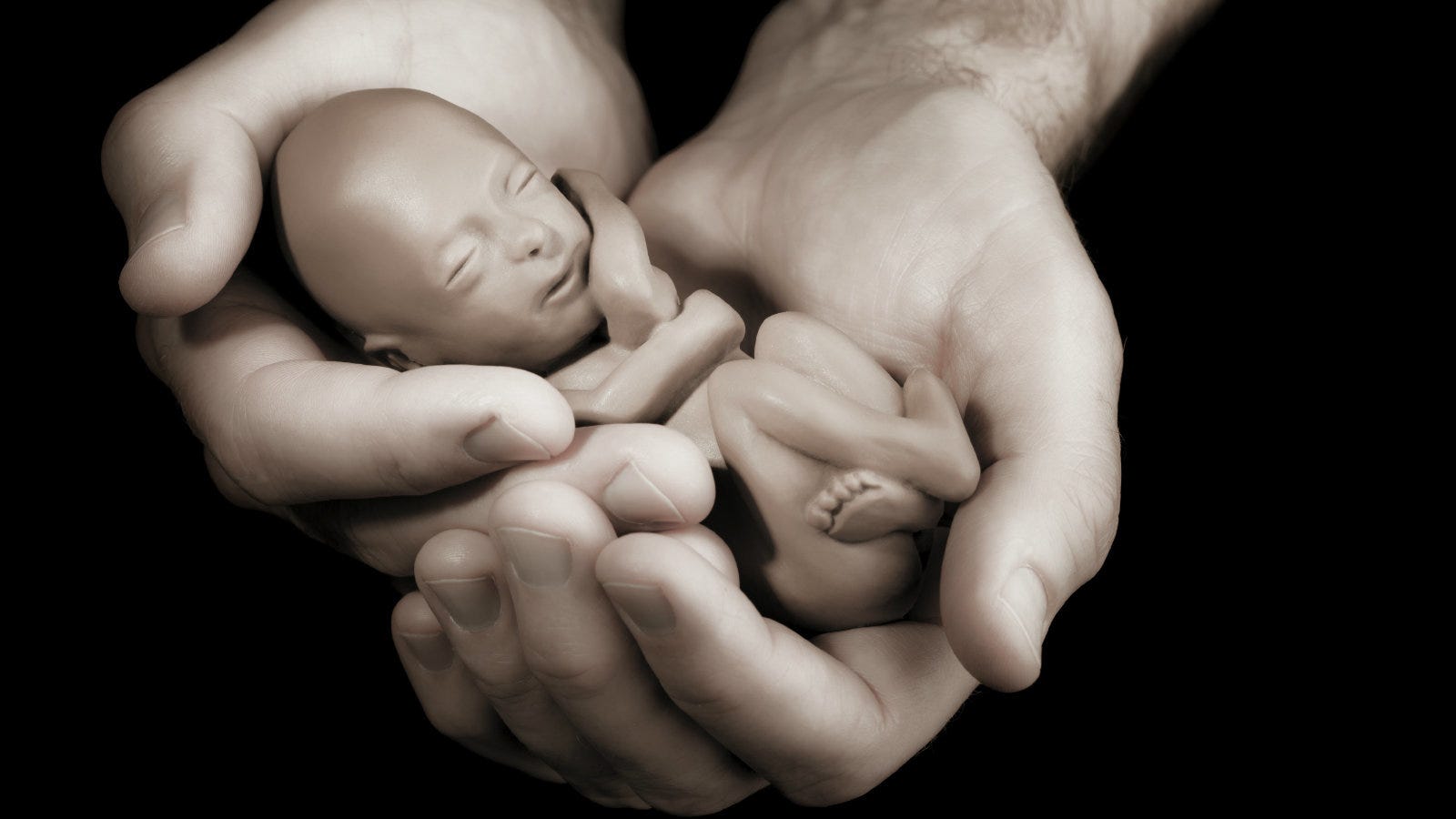
Qur’anic (Dynamic) Paradigm of Health: — 26 “The grisly evidence presented at Gosnell’s trial included details about babies born alive during the abortion procedure and subsequently killed by the snipping of their spines. Testimony from clinic workers included heartbreaking stories of babies surviving the brutal abortion assault and crying for help only to be viciously killed. Evidence... Continue Reading →
Fifth Lesson of Wazn Shairi

There is another extremely popular bahr:21221122112222 Lab pe aa-tee hai du-aa ban-ke ta-man-naa mey-ree2 1 2 2 1 1 2 2 1 1 2 2 2 2The underlined and bold 2 can be divided into 11. See:Baa-t kar-nee mu-jhe mush-kil ka-bhi ai-see to na thee2 1 2 2 1 1 2 2 1 1 2... Continue Reading →
Fourth Lesson of Wazn Shairi

One clarification before going forward: If a word is followed by another word which begins with alif, the two words can be pronounced in a different way changing the original wazn of the words. For example, aaKHir is dard kee dawaa kyaa hai In this shair the wazn of aaKHir is22 and is is also... Continue Reading →

